


Assessing the potential of major earthquakes near NEOM
Saudi Arabia might not be shaken from its ambitious development goals, but it cannot rule out large earthquakes entirely.
Saudi Arabia might not be shaken from its ambitious development goals, but it cannot rule out large earthquakes entirely.

Unusual reaction pathways to hydrocarbon clusters could bring a paradigm shift to the understanding of soot and interstellar chemistry.

A screen-printing approach to creating foldable circuits could make many functional devices easier and cheaper to mass produce.

Understanding how liquid marbles behave as they evaporate provides valuable insights into these unique structures and their potential applications.

Molecules move within elongated protrusions to help stabilize migrating cells inside the bloodstream.

Incorporating regular cracks in electrodes for wireless strain sensors brings surprisingly better sensitivity.
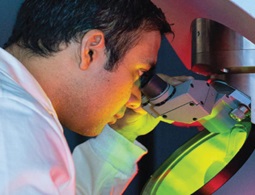
Tiny light-emitting devices that can create all the colors in the rainbow are essential for the next generation of phones and screens.
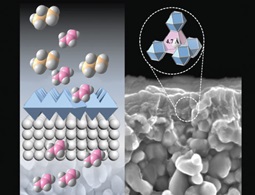
Metal-organic framework membranes that selectively separate hydrocarbons set the stage for more sustainable petrochemical processes.

Corals face a grim future over the coming decades and researchers urge faster efforts to reduce global emissions and to enhance coral reef resilience.

New modeling shows that heatwaves across Europe have increased in both frequency and spatial extent over the past century.
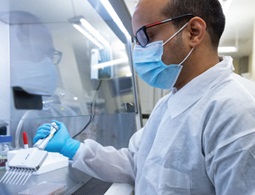
An in vitro cellular model that mimics the initial phase of human embryo creation could improve understanding of infertility.
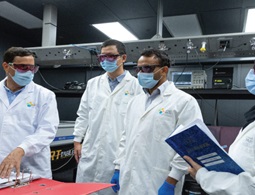
Extending the lifetime of hot electrons could help make solar cells more efficient.
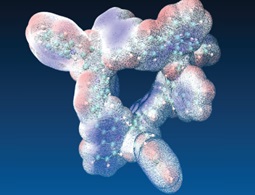
Polymer membranes with precisely controlled, uniform and very small pore structure could bring ion-sieving capacity to many applications.
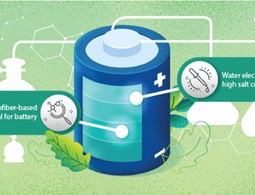
Batteries made from earth-abundant metals show great potential for grid-scale energy storage.
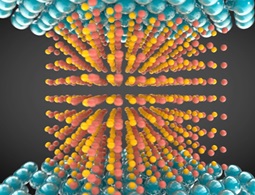
A nano-scale memristor is shown to have superior stability for random number generation as an integral part of secure data transmission.

A simple camera system paired with a sophisticated image-processing algorithm can achieve faster and more accurate reconstructions of particle flow.

An eight-fold speed up of deep machine learning can be achieved by skipping the transmission of zero values.
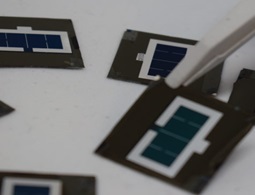
Clever contacts enhance perovskite/silicon tandem solar-cell performance.
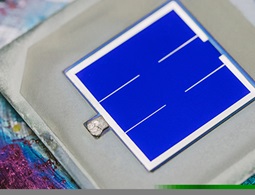
A simple holistic solution plugs the performance-sapping defects that hamper new alternative solar materials.

A partial matching approach can overcome the dimensionality "curse" of continuous measurements over time to yield more accurate future predictions.