Features
The vision of MOSTI originated from the Custodian of the Two Holy Mosques King Abdullah bin Abdulaziz Al-Saud’s dream of KAUST as a modern ‘House of Wisdom’ built to rekindle the great and noble virtue of learning.
The Museum celebrates the contributions of Muslim scholars to science and technology during the first Golden Age of Islam from the 7th to 17th century. These Muslim scholars include amongst them the great scientists, inventors, engineers, mathematicians and teachers of that time, such as Jabir ibn Hayyan, Abbas bin Firnas, al-Kindi, al-Razi, al-Jazari and Taqi al-Din. MOSTI will demonstrate how their contributions shaped the world as we know it today and how their pioneering work laid the foundation for modern civilization. The benefits of their work are all around us today.
The exhibits in the Museum demonstrate that teaching and learning have been an important part of the Islamic way of life since the birth of Islam in the mid 7th century. MOSTI uses cutting edge technology to showcase the major contributions of Muslim scholars to science and technology during the first Golden Age of Islam. Modern interactive techniques, such as touch screens, moving plasma screens, multi-touch tables, flipbooks, automated scale models and interactive videos, have been used to tell the story of ancient science.
The exhibits are arranged into nine clusters:
- Introduction to MOSTI,
- Learning Institutions
- Astronomy and Navigation
- Technology
- Chemistry
- Architecture
- Mathematics
- Life and Environmental Sciences
- Conclusion.
It is intended that MOSTI will become a forum on the KAUST campus where topical issues in science and technology will be discussed and debated. Popular science presentations will also be given at the Museum by KAUST faculty and visiting researchers.
In its opening phase, and due to limited capacity, admission to the Museum is limited to the KAUST community and the University’s selected guests. KAUST’s vision has always been rooted in the traditions of the Bayt Alhekma and the signal role played by Islamic thinkers in the development of science and technology. It’s presence on the KAUST campus is intended first and foremost to expose the University’s modern-day researchers to the rich historical foundation on which their University has been built, and the illustrious footsteps in which they follow.
Our aim is to inspire the new generation of scientists to look at the world through ancient eyes and see different connections to explore, and join the ranks of scientists by their accomplishments.
KAUST Investigator, Dr. Edward Hartley Sargent is set to feature in a multi-part Canadian documentary series on Nanotechnology, which will feature world leading scientists. The documentary series is scheduled to be broadcast on the Canadian Broadcasting Channel (CBC).
The documentary is a joint production between CBC, Japanese TV Channel - NHK and Franco-German TV Channel – ARTE. Dr. Sargent will feature in the series episode about Nanotechnology and the Environment.
According to Kenton Vaughan, CBC Director of the documentary series, Dr Sargent was chosen for this prestigious documentary series because of his word class reputation in the field of Nanotechnology.
As a KAUST Investigator, Dr. Sargent’s research will focus on Nanotechnology for Solar Energy. He plans to create low cost paint on cells that convert solar rays into electricity, Dr. Sargent will apply KAUST resources to create efficient and low-cost solar cells.
In his lecture, “Energy in the Twenty First Century”, as part of KAUST’s Winter Enrichment Program (WEP), KAUST Investigator Dr. Ahmed Ghomiem focused on the future energy challenges the world faces as well as the need to use alternative energy sources.
According to Dr. Ghoneim, the use of petroleum in the world has been accelerated by countries with rapid growth economies, such as Brazil, China and India. This means that: increases in oil and gas pricing, global warming and increased carbon emissions can encourage us to think of ways of diversifying our energy sources. Searching for new alternatives to non-oil and gas related sources, which are more durable and environmentally friendly, at the same time enhancing the efficiency of existing sources.
During his presentation, he offered solutions to the energy crises over the next ten years. One of which can allow us to increase the efficiency of energy consumption by using sophisticated high efficiency ‘Fuel cell’ apparatus. For example, the use of turbines and high performance adapters in order to reduce the consumption of oil and gas used in this process.
According to Dr. Ghoneim, the use of this energy source will rationalize the use of electricity in both heating, and cooling in the use of thermal insulation of buildings. Furthermore, preventing the resurgence and proliferation of carbon dioxide in the atmosphere by re-injecting the emissions in to underground wells of more than 2 kilometers in depth.
He continued his presentation talking about ‘renewable energy’ sources, such as solar energy which are considered safe and environmental friendly in their aim to satisfy energy needs. As Dr. Ghoneim points out; “Using solar energy to generate electric power is more important and feasible than burning oil for electricity. For that reason, the world has been heading in recent years to the manufacturing of electric powered vehicles”.
Dr. Ghoniem said, “If Saudi Arabia adopted a development plan for renewable solar energy during the next decade, using this energy would enable the Kingdom to undertake expansion and diversification in the Petrochemical industry. Therefore, increasing the size of Saudi Arabian exports, given the forecasts of an expected boom in the petrochemicals and plastics industries, which nowadays rely in their production on oil and gas.”
Saturday 06 February – Wednesday 10 February
Week 4 of the Winter Enrichment Program (WEP) at KAUST continues with a wide variety of lectures to stimulate the mind. The last week of the WEP will see a number of KAUST professors and invited speakers present on such wide ranging topics as Research and Development, Solar Energy and Computer Science, to name but a few. Here are a selection of lectures taking place this week;
Dr. Bin-Juin Huang, Director of the New Energy Center at the National Taiwan University will deliver a lecture entitled “Management of R&D and Innovation”. He will discuss how technology or product is developed and managed through research and development. Dr. Huang will emphasize how knowledge is applied in product design and innovation.
Also, later in Week, Dr. Huang will present his “Solar Building Technology’ lecture. This talk will include a technical discussion of his research at National Taiwan University on solar energy. He will introduce new technologies in solar building technology. Dr. Huang will emphasize how to approach zero-energy building from low-energy building and what kinds of advanced technologies are needed for solar buildings. Continuing with the solar energy theme, Dr. Mohamed Amr Serag-Eldin, Professor in the Mechanical Engineering Department at the American University of Cairo, will present his lecture, “New Developments in Large-scale Solar Energy Conversion”.
Computer Science is the subject of two lectures delivered by Dr. Pat Hanrahan, Canon Professor of Computer Science and Electrical Engineering at Stanford University. In the lecture, “Why Are Graphic Systems so Fast”, he will discuss the rapidity of graphics systems. Additionally, Dr. Hanrahan will deliver a lecture entitled “Domain-specific Languages for Heterogeneus Computer Platforms. He will make the case for using domain-specific languages for writing efficient and portable programs for these platforms.
Dr. Ahmed Sherif, Associate Professor of Construction and Architectural Engineering at the American University in Cairo will present a lecture, “ Daylighting, Thermal Control and Privacy in Buildings: Evaluating External Perforated Window Screens in Desert”. He will discuss his research on thermal control in desert buildings.
An evening lecture which promises to be popular amongst the KAUST Community is “How Noble in Reason” by Dr. Alyn Rockwood, Professor of Mathematics and Computer Science at KAUST. He will discuss his first novella, a futuristic, murder mystery which explores the question of what happens when computers become smarter than humans.
Further Details
- Management of R&D and Innovation, Dr. Bin Juine Huang, Saturday, 6 February 2010, 1:00pm - 3:00 pm, Building 9, Room 2322
- How Nobel in Reason, Alyn Rockwood, Saturday 6 February 2010, 7:30pm - 9:30pm, Auditorium
- Why are Graphics Systems so fast? , Dr. Pat Hanrahan, Sunday, 7 February 2010, 9:30am - 11:30am, Building 9. Room 3223
- Daylighting, Thermal Control and Privacy in Buildings: Evaluating External Perforated Window Screens in Desert, Dr. Ahmed Sherif, Sunday 7 February, 9.30am – 11.30am, Building 9, Room 3223
- New Developments in Large-scale Solar Energy Conversion, Dr. Mohamed Amr Serag-Eldin, Monday 8 February, 9.30am-11.30am, Building 9, Room 3128
- Solar Building Technology, Dr. Bin-Juine Huang, Monday 8 February, 1pm – 3pm, Building 9, Room 2322
- Domain-specific Languages for Heterogeneus Computer Platforms, Dr. Pat Hanrahan, Tuesday 9 February 2010, 9:30am to 11:30am, Building 9, Room 3128
Week 2 of the Winter Enrichment Program (WEP) at KAUST consisted of many seminars and lectures which centered on a dominant scientific theme. In particular, a series of ten “Nanotechnology” seminars involving KAUST faculty and investigators provided lively discussion in this important scientific area.
In his lecture, “X-ray Imaging: From Tomography to Nanotomography” as part of Nanotechnology Seminar IV, KAUST Investigator, Dr. Paulo Monteiro, presented on the subject on X-ray tomography. An area of Nanotechnology, which has been the greatest breakthrough in medical diagnostics since the middle of the twentieth century. His lecture introduced the concepts of x-ray microtomography. Dr. Monteiro spoke about the physics behind the techniques used to improve the resolution from millimeters to nanometers. Also, Dr. Monteiro described the joint KAUST-University of Berkeley Project which is developing world class nanomography.
Dr. Edward Hartley Sargent presented a lecture entitled “Colloidal Quantam Dots for High-efficiency Solar Energy Capture” as part of Nanotechnology Seminar VI. He presented on the building of solution-processed solar cells based on colloidal quantum dots that offer the prospect of full-spectrum utilization of the solar resource.
In her lecture, “Controlled Release and Delivering Utilizing Nanomaterials”, Dr. Niveen Khashab, Assistant Professor of Chemical Science at KAUST described the “smart” mechanicized nanoparticles that have many beneficial applications especially in the chemotherapy drug administration for cancer patients. She discussed the challenges involved in controlled release and delivery.
Dr. Ingo Pinnau’s lecture, “Current Status of Membrane-based Gas Separation as part of Nanotechnology Seminar VIII gave an overview on the state-of-the-art membrane based separation technology. His lecture highlighted the fact that there are very few commercial membrane types and limited applications. Also, Dr. Pinnau discussed emerging gas and vapour separation applications.
An evening lecture which caught the imagination of students and the KAUST community was “Finding Science in ‘Finding Nemo’” presented by Dr. Michael Berumen, Assistant Professor of Marine Science at KAUST. This presentation examined elements of marine science hidden in a number of clips from the Disney movie, ‘Finding Nemo’.
Entrepreneurship in Saudi Arabia and the Middle East were the subject of two lectures, presented by Ms Nada Hashmi, Ph.D candidate at the Sloan School of Management. In her lecture, “Entrepreneurship in Saudi Arabia”, Ms Hashmi presented findings from her own study, detailing the ‘typical’ Saudi Arabian entrepreneur. She described the business landscape in the kingdom, which has seen a steady increase each year of start-up companies. Also, Ms Hashmi outlined the typical funding options and challenges faced by entrepreneurs in Saudi Arabia.
Week 3 of the Winter Enrichment Program
Saturday 30 January – Wednesday 03 February
Week 3 of KAUST’s Winter Enrichment Program (WEP) continues with an eclectic mix of lectures, seminars and workshops. Central to the WEP during Week 3 is a series of Science, Business and Technology lectures and seminars taking place Among the seminars and lectures taking place:
Dr. Anna Tramontano, KAUST Investigator, delivers a keynote lecture entitled “ The Computational Analysis of Genomes and Proteomes”. During this lecture, Dr. Tramontano will provide an overview of the current strategies for analyzing the products of already identified genes and for indentifying novel ones.
Another KAUST Investigator, Dr. William Koros will deliver his “Membrane Pathways to Low-Energy Intensive Large-scale Separations” lecture. This presentation will consider the various paths to overcome fundamental hurdles that still impede widespread applicability of membranes. Dr. Koros will provide guidance in the selection of the type of paths to follow, based on learning from past successes.
Central to Week 3 of the WEP are two different lectures about research on the Red Sea from Dr. Pei-Yuan Qian, Lead Investigator in the Hong Kong University of Science and Technology (HKUST) – KAUST partnership. In his lecture, “Bioactive Substances from Marine Microbes: Overview and Future Perspective for Biotechnology Research on the Red Sea” Dr. Qian will give an overall review on bioactive compounds extracted from marine compounds. Additionally, he will discuss the HKUST-KAUST partnership program and its aim to develop a microbial culture collection and screening for bioactive molecules from the Red Sea.
For his second lecture, “Microbial Metagenomic Study of Brine Pools and Coral Reef Species from the Red Sea”, Dr. Quian will share major findings from the HKUST – KAUST partnership on microbial community structures, functions and important metabolic pathways of two big brine pools. He will also present findings from microbial communities associated with major coral and sponge species in the coral reefs in the Jeddah area of Saudi Arabia.
“Recent Research Progress in the KAUST Investigator Research” is the subject of Dr. Nicholas Paul Harberd’s lecture. He will discuss recent progress with various aspects of his KAUST Investigator research program at Oxford University and its integration with research at KAUST. Dr. Harberd will present work on genomic, genetic and salt-tolerance experiments on Arabidopsis and wheat.
In “Environmental Consequences of a Nuclear war: The Nuclear Winter Theory from the 1980’s and Nuclear Proliferation in the 21st Century”, Dr. George Stenchikov, Professor of Environment Science at KAUST, will discuss the Nuclear Winter Theory developed in the 1980’s during the Cold War.
The subject of the architecture of the KAUST campus in relation to sustainability forms the basis of two lectures this week. Mr Antonio Valenzuela, KAUST Campus Support Director, will present a lecture entitled, “Leadership in Environmental Design (LEED) – KAUST sets the Platinum standard for World-class Research institutions”. This lecture will provide a perspective of the scale of the effort and work needed to preserve the university’s LEED certification.
A companion piece to this presentation will be the “KAUST Architecture: Sustainability in a Changing Climate” lecture presented by Mr Hani Itani, KAUST Technical Advisor. He will tell the story of the challenges faced in developing the master plan for KAUST. Mr Itani will discuss how the KAUST campus is a leading example of unique eco-architecture. Additionally, he will show how the campus design encompasses a gratifying blend of Islamic tradition and architectural modernity while dealing with the harsh climate conditions of Saudi Arabia. Also, Mr Itani will discuss the innovative plan which KAUST implemented, for low energy buildings that utilize unitary self-shading, solar towers and natural ventilation systems.
Further Details
- Keynote: The Computational Analysis of Genomes and Proteomes, Dr. Anna Tramontano, Saturday, 30 January, 8.30am – 9.30am, Auditorium
- Membrane Pathways to Low-Energy Intensive Large-scale Separations, Dr. William Koros, Saturday, 30 January, 1.00pm – 3.00pm, Building 9, Room 3225
- Environmental Consequences of a Nuclear war: The Nuclear Winter Theory from the 1980’s and Nuclear Proliferation in the 21st Century, Dr. George Stenchikov, Saturday, 30 January, 7.30pm – 9.30pm, Auditorium
- Bioactive Substances from Marine Microbes: Overview and Future Perspective for Biotechnology Research on the Red Sea, Dr. Pei-Yuan Qian, Saturday 30 January, 1.00pm – 3.00pm, Building 9, Room 3224
- Microbial Metagenomic Study of Brine Pools and Coral Reef Species from the Red Sea, Dr. Pei-Yuan Qian, Monday, 1 February, 9.30am – 11.30am, Building 9, Room 3225
- Leadership in Environmental Design (LEED) – KAUST sets the Platinum standard for World-class Research institutions, Mr Antonio Valencia, Monday, 1 February, 7.30pm – 9.30pm
- Recent Research Progress in the KAUST Investigator Research, Dr. Nicholas Paul Harberd, Wednesday 3 February, 9.30am – 11.30am, Auditorium
- KAUST Architecture: Sustainability in a Changing Climate, Mr Hani Itani, Wednesday, 3 February, 7.30pm – 9.30pm, Auditorium
Week 2 of the WEP is shaping up as a week where our intellectual horizons are further broadened and our collective imaginations are significantly stretched . Central to the WEP this week is a series of 10 Nanotechnology seminars which feature KAUST investigators and faculty at the helm. Here are a selection of the seminars and lectures taking place.
In ‘Nanotechnology Seminar V’, Dr. Yi Cui, KAUST investigator will deliver a seminar entitled “Next-generation Energy Storage Technology with Nanomaterials”. Dr. Michael D. McGehee, co-Principal Investigator of the Center for Advanced Molecular Photovoltaics (a KAUST GCR Center) follows with his “Organic Solar Cells” lecture. He will explain how organic semiconductors can be used to make solar cells. He will discuss the efficiency and lifetime of state-of-art cells. Dr. McGehee will also present the research goals and some accomplishments of the KAUST Center for Advanced Molecular Photovoltaics (CAMP).
For Nanotechnology Seminar VI, Dr Edward Hartley Sargent, KAUST Investigator will deliver his “Colloidal Quantun Dots for Ultrasensitive Light Detection” seminar. He will review the latest advances in this field and discuss their prospects. Dr. Paulo Monteiro, KAUST Investigator will then present his “Use of Synchrotron Radian to Study Nanomaterials” lecture. He will present a survey of some of the most important techniques used in a modern synchrotron facility. Dr. Monteiro, will also describe how diamond anvil cells can be used to determine the behavior of crystals under pressure.
The lectures during Nanotechnology Seminar VII include Dr. Emmanuel P. Giannelis, co-Principal Investigator of the KAUST-Cornell Center for Energy and Sustainability presenting his “Nanocomposites: Opportunities and Challenges” lecture. He will discuss some of the successes in nanocomposities and outline the challenges for reaching their potential. Dr. Mohamed Eddaoudi, Professor of Chemical Science follows with a lecture entitled “Metal-Organic Materials: Strategies toward Functional Nanoporous Materials”. During this lecture, Dr. Eddaoudi will discuss the molecular building block (MMB) approach as well as physical properties of some corresponding nanoporous metal-organic materials (MOMs).
Dr. Ingo Pinnau, Director of the Membranes Research Center will deliver one of the lectures during Nanotechnology Seminar VIII. For the ‘Current Status of Membrane-based Gas Separation” lecture, Dr. Pinnau will present an overview on state-of-the-art membrane-based gas separation technology and provide some insight towards future developments.
Dr. Peng Wang, Assistant Professor of Environmental Sciences and Engineering, will present the “Nanotechnology for Environmental Decontamination” lectures for Nanotechnology Seminar IX. During this lecture, Dr. Wang will talk about design, synthesis and application of magnetic nanomaterials for environmental treatment, especially contaminant removal.
In Nanotechnology Seminar X, Dr. Edward Hartley Sargent will deliver one of the lectures. For the “Colloidal Quantum Dots for High-efficiency Solar Energy Capture” lecture, He will discuss recent advances in building solution-processed solar cells based on colloidal quantum dots that offer the prospect of full spectrum utilization of the solar resource.
Photocatalysis is another WEP theme during week 2 with Dr. Eric Puzenat from the Institut Francais du Petrole (IFP) at Ecole Centrale De Lyon delivering his “Challenges of Photocatalysis to Work in Visible Solar Light” lecture, This talk will explore the different strategies to extend the active range of photocatalysis to visible light. Also, Dr. Puzenat, will present a further lecture entitled “Hydrogen Production by Photocatalysis” which will explore the possibility of using sunlight in conjunction with semiconductors. This is for the production of hydrogen from water and other solvents via photocatalytic processes.
Technology and business lectures are also taking place during WEP. Dr. Emmanual P. Giannelis, co-Principal Investigator of the KAUST-Cornall Center for Energy and Sustainability will deliver a lecture entitled “Science, Technology and Business”. This lecture will make linkages and provide context by which science and technology carried by companies. Other technology and business lectures taking place include Nada Hashmi from the Sloan School of Management at MIT, delivering a lecture entitled “Current trends in Entrepreneurship in Saudi Arabia”. This presentation will cover recent trends in entrepreneurship within the kingdom, including factors, regulations and industries shaping the entrepreneurial field.
Further Details
- Nanotechnology Seminar V: Next-generation Energy Storage Technology with Nanomaterials, Dr. Yi Cui Monday 25 January, 9.30am - 11.30am, Auditorium
- Nanotechnology Seminar V: Organic Solar Cells, Dr. Michael D. McGehee Monday 25 January, 9.30am - 11.30am, Auditorium
- Nanotechnology Seminar VI, Colloidal Quantun Dots for Ultrasensitive Light Detection, Dr Edward Hartley Sargent, Monday 25 January, 1.00pm – 4.30pm, Auditorium
- Nanotechnology Seminar VI, Use of Synchrotron Radiation to Study Nanomaterials, Dr. Paulo Monteiro, Monday 25 January, 1.00pm – 4.30pm, Auditorium
- Nanotechnology Seminar VII, Nanocomposites: Opportunities and Challenges, Dr. Emmanuel P. Giannelis, Tuesday 25 January, 9.30am - 11.00am, Building 9, Room 2325
- Nanotechnology Seminar VII, Metal-Organic Materials: Strategies toward Functional Nanoporous Materials, Dr. Mohamed Eddaoudi, Tuesday 25 January, 9.30am - 11.00am, Building 9, Room 2325
- Nanotechnology Seminar VIII, Current Status of Membrane-based Gas Separation, Dr. Ingo Pinnau, Tuesday 26 January, 1.00pm – 4.30pm, Building 9, Room 2325
- Nanotechnology Seminar IX, Nanotechnology for Environmental Decontamination, Dr. Peng Wang, Wednesday 27 January, 9.30pm – 11.30pm, Building 9, Room 2325
- Nanotechnology Seminar X, Colloidal Quantum Dots for High-efficiency Solar Energy Capture, Dr. Edward Hartley Sargent, Wednesday 27 January, 1.00pm – 3.00pm, Building 9, Room 2325
- Lecture: Challenges of Photocatalysis to Work in Visible Solar Light, Eric Puzenat Monday 25 January, 1.00pm – 3.00pm, Building 9, Room 4125
- Lecture: Hydrogen Production by Photocatalysis, Eric Puzenat Tuesday 26 January, 1.00pm – 3.00pm
- Lecture: Science, Technology and Business, Dr. Emmanual P. Giannelis Monday, 25 January, 5.00pm – 6.00pm, Building 9, Room 4125
- Lecture: Current trends in Entrepreneurship in Saudi Arabia, Nada Hashmi Wednesday 27 January, 9.30pm – 11.30pm, Building 9, Room 2322
Week 1 of the Winter Enrichment Program at KAUST saw a plethora of workshops, lectures, courses and seminars to delight the students and members of the KAUST community. Amongst, the most heavily attended lectures were those featuring KAUST Investigators.
Dr. Ahmed Ghonium’s lecture, “Energy Challenges in the 21st Century” covered ‘energy realities’ and the need for scalable solutions as energy consumption is rising fast. He spoke about the “Pacala and Sacalow” theory in solving climate issues over the next 50 years. Some of the areas covered were the need for more efficient buildings, vehicles and coal plants. According to Dr. Ghonium, there was a real need for the use of renewable sources of energy – like, wind instead of coal or electricity.
In his lecture “Complex Natural Products as a Driving Force for Discovery in Organic Chemistry”, KAUST Investigator, Brian Scholtz discussed retrosynthesis, Tsuji Allylation reactions and the development of new catalytic bond forming reactions developed in his lab.
The evening lectures in the Auditorium also proved popular amongst students and members of the KAUST community. The lectures produced thought provoking discussion amongst the audience and the speakers. One such lecture was “Computer Science in the Information Age” presented by Dr. John Hopcroft, Professor of Computer Science at Cornell University and a previous winner of the Turing award. The lecture focused on the major change underway in the academic discipline of Computer Science.
According to Professor Hopcroft, some of the drivers of change within Computer Science are the merging of computers and communication, data now being available in digital form and the Internet/world wide web. He also demonstrated the workings of search engines and clustering methods. In his closing remarks, Professor Hopcroft made the distinction that, in the past, Computer Science was an academic discipline with the aim of ‘making computers useful’. However, in the future, probability and statistics hold the key for Computer Science.
Other evening lectures which captured the imagination were the two lecture series entitled “Technology Start-ups: Experiences, Stories and Advice” with Richard Dewer, co-founder Of FreeDesign, a 3D innovation company and Joe Esch, co-founder of @Last Software which developed the SketchUp 3D modeling program. During this talk, Mr Dewer and Mr Esch described their experiences with startup companies and the many challenges they faced, including getting the companies off the ground, funding decisions and technology challenges.
Mr Dewer shared his experience as a co-founder of Spatial Technology and as the CEO who led Spatial to a successful initial public offering (IPO). During his presentation, Mr Dewer outlined some of the reasons why the company was successful which were that there was a strong investment team behind them which understood and believed in the Spatial vision. The company had very strong core technology teams and its software architecture enabled outsiders to contribute to technology and prosper. Also, the company’s marketing department knew how to map Spatial’s internal enthusiasm into an external buzz, excitement and desire.
Mr Esch shared his experience of co-founding a company and its eventual sale to Google. In this entertaining lecture, he outlined as the importance of building a good team with specialist skill sets as well as the company’s exit strategy.
Find out more about the seminars and events happening during Week 2 of the WEP Program
KAUST’s inaugural Winter Enrichment Program (WEP) was officially launched on January 16th, with a keynote speech from Dr. David Keyes, Dean of Mathematical and Computer Sciences and Engineering.
During his speech, Dr Keyes said that the WEP was ‘a feast of science”. He drew parallels with the international diversity of KAUST with the structure of WEP and said; “KAUST means diversity, and the WEP mimics this….”
Dr. Keyes also described how the WEP is intertwined with the mission of KAUST. In particular, the advancement of science and technology through education and research.
The variety of WEP’s offerings is closely aligned with KAUST’s aims to diversify the Saudi Arabian economy through innovation and enterprise.
The WEP is a month-long semester from January 15th – February 10th, designed to broaden our intellectual horizons and stretch our collective imaginations. Through the more than 100 courses, workshops, seminars, lectures and recreational events, the WEP is a time to discover new fields of interest and to be inspired.
For more information about the WEP, please visit the WEP web pages
A delegation from Saudi Arabia, led by His Excellency Minister Ali Ibrahim Al-Naimi, Chairman, KAUST Board of Trustees, and including Professor Choon Fong Shih, President of KAUST, visited Beijing, China November 11-15, 2009.
As part of the visit, Professor Choon Fong Shih signed Memorandums of Understanding (MOU) on behalf of KAUST with Professor Qifeng Zhou, President of Peking University, and Professor Chunli Bai, Executive Vice President of the Chinese Academy of Science.
Under the terms of the MOUs, KAUST proposes to collaborate with Peking University and the Chinese Academy of Sciences in the development of student exchange programs. These programs will aim to advance opportunities for graduate students from KAUST to visit Peking University / Chinese Academy of Science, and vice versa, for the purpose of advanced study and research.
Another integral part of the two MOUs is exploration of potential areas for research collaboration. The major research areas in which one or more research programs may be established include:
- Resources, Energy and Environment
- Biosciences and Bioengineering
- Material Sciences and Engineering
- Applied Mathematics and Computational Science
Also during the Beijing visit, His Excellency Al-Naimi was awarded an honorary doctorate degree by Peking University.
The delegation also visited the Institute of Geographic Sciences and Natural Sciences Research, the Institute of Electrical Engineering, and attended roundtable discussions on scientific research and transfer at Peking University.
Front Row: left to right
Professor Choon Fong Shih, President of KAUST and Professor Qifeng Zhou, President of Peking University sign the Memorandum of Understanding.
Back row: left to right
Mr. Khalid A. Al-Falih, President and CEO of Aramco
Professor Jianhua Lin, Deputy President and Provost of Peking University
HE Ali Al-Naimi, Minister of Petroleum and Mineral Resources,
Chairman KAUST Board of Trustees
Mr. Ali H. Al-Twairqi, Director General of the Minister's Office
HE Yahya A. Al-Zaid, Ambassador of Saudi Arabia to China
Dr Yilin Wang, Vice President of China National Petroleum Corporation
Dr Chun Lu, Director for East Asia and Strategic Initiatives of KAUST
Professor Wei Huang, Deputy President of NJUPT
Front Row: left to right
Professor Choon Fong Shih, President of KAUST and Professor Chunli Bai, Executive Vice President of Chinese Academy of Sciences
sign the Memorandum of Understanding.
Back row: left to right
Dr Chun Lu, Director for East Asia and Strategic Initiatives, KAUST
Professor Wei Huang, Deputy President, NJUPT
Mr Huasheng Qiu, Deputy Director-General, Bureau of International Cooperation,
Chinese Academy of Sciences
Professor Gang SU, Vice-President of Graduate University, Chinese Academy of Sciences
Professor Liye Xiao, Director-General, Institute of Electrical Engineering,
Chinese Academy of Sciences
Professor Lucheng Ji, Director, Division of Energy, Bureau of High-Tech R & D,
Chinese Academy of Sciences
Professor Yuehu Kang, Researcher, Institute of Geographic Sciences
and Natural Resources, Chinese Academy of Sciences
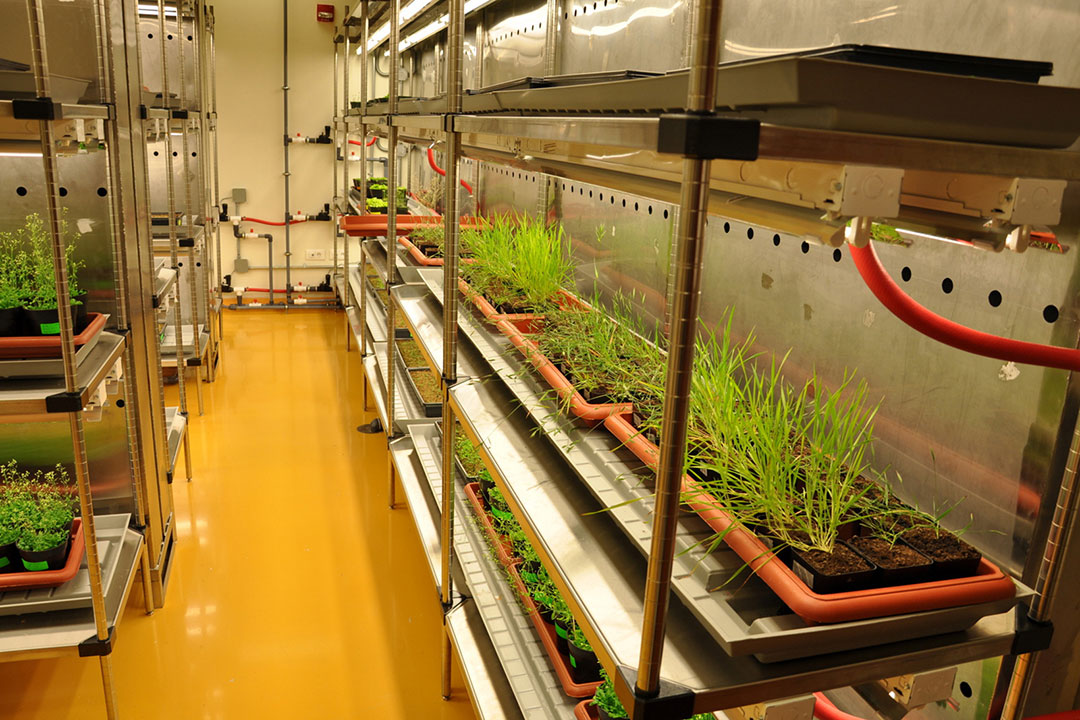
Dr. Jian-Kang Zhu, Director of the Plant Stress Genomic and Technology Research Center at KAUST, has led a breaththrough research project which determined how plants and crops can survive adverse environmental conditions, like drought. This pioneering research could have a major impact on food production and the availability of freshwater across continents by reducing irrigation.
Dr. Zhu’s research, which has recently been published in two papers in the December 3rd issue of ‘Nature’, had the objective of gaining an understanding into how plants cope with drought at a molecular level. This was necessary to improve the drought tolerance of crop plants through either genetic engineering or marker assisted breeding.
Dr. Zhu and his collegues, including KAUST postdoctoral researchers, Hiroaki Fujii and Visswanathan Chunnusarny, report on how they reconstituted in a test tube the process of information transfer from receptor to transcription factors controlling stress responsive gene expression. The abscisic acid (ABA) signal pathway that they reconstituted is often viewed as the most important pathway for plants to cope with drought stress. ABA has turned out to be a vital hormone that plants use when conditions are bad. This was the first time the atomic structure of the ABA receptor had been solved and the ABA pathway had been reconstituted ‘in vitro’ – completed outside the living body of the plant.
The results from the research included an improvement in the knowledge of how plants perceive and respond to ABA. The knowledge can lead to improved crop yields in the face of drought and other stress like heat, salinity and extreme temperature, which can have a major impact on food production and fresh water availability.
The Plant and Genomics Center plans to use the knowledge of the ABA pathway to make transgenic plants that will have substantially higher levels of drought tolerance. This will be achieved by manipulating the levels and activities of the key components of the pathway. The Center also plans to investigate how drought stress triggers the production of ABA.
Key to the vision of the Center is the study of the mechanisms by which plants are able to tolerate salt and drought conditions and create greater understanding of these mechanisms in order to increase the percentage of total arable land and permanent cropland. Currently, the Center has four professors, eighteen postdoctoral researchers and seven staff members.
Story Source
Some Materials adapted from ScienceDaily.
From its inception, KAUST has worked to create global partnerships with many dynamic research institutions. The first of these partnerships was with the Woods Hole Oceanographic Institution (WHOI). This partnership has enabled the university to take its first steps as a scientific community - tagging whale sharks in the Red Sea.
During March and June of the past year, Michael Berumen, Assistant Professor of Marine Science at KAUST, Dr. Simon Thorrold of WHOI, Dr. Greg Skomal of Massachusetts Marine Fisheries, along with a team of students and researchers from WHOI, assisted in tagging six whale sharks. The team used popup satellite archival transmitting (PSAT) tags in the Red Sea. In March, Three whale sharks were tagged near Al- Lith, just south of Jeddah and three more were tagged near Al-Qunfidhah even further to the south.
The tags will remain on the whale sharks until early next year when they will detach from the animals and relay information about the movements of each whale shark back to KAUST and WHOI scientists. According to the WHOI, the results of this information will allow scientists to create new solutions for the conservation of marine life and ecosystems. Dr. Berumen says, "In addition to gaining some groundbreaking information about the movements of these incredible animals, I hope the project will inform people in our local and regional community about KAUST’s interest and work in the Red Sea. The Red Sea Science and Engineering Research Center at KAUST has a sincere desire to facilitate this kind of outreach."
Dr. Berumen added his views about what this type of research may mean for the future of KAUST: "It’s exciting on many levels. It’s exciting research using state-of-the-art technology, working with very unique animals and creating a lot of public interest and enthusiasm. As with many other aspects of KAUST, I expect this will all only get even better."
Whale sharks (Rincodon Typus) are rare, but can be found throughout many of the worlds oceans. This collaborative research effort by KAUST and WHOI is some of the first and only known research on whale sharks in the Red Sea.
KAUST people are talented educators, researchers, and staff from all over the world intent on scientific discovery and world change. One such person, who represents the energy of this newly emerging community, is Dr. David Keyes, Dean of Mathematical and Computer Sciences and Engineering.
According to Dr. Keyes, his reasons for joining KAUST included the enormous number of resources, the unique university structure and the research agenda, which included sustainability, and mediation of environmental change. He said, "Here the research agenda is much more in tune with the student idealism of the era…we’re doing green things, we’re doing photovoltaics at the scale that could be implemented on one house or one factory in Africa without being connected to the grid. We’re doing things like stress tolerance agriculture for the global climate impending change in world agriculture. We’re doing clean combustion, […] and even stretching out conventional petroleum based energy and other technology is a good goal. These are goals that are much more accessible to me at KAUST than one single U.S. research institution."
In addition, Keyes sees KAUST as a great adventure. He says; "There’s something very special about the chemistry of a team that is the first to do something. The Apollo moon mission program of the U.S. in the 60s was a preoccupation of thousands of people for a decade. I find the spirit of the launch to be very contagious."
What makes Dr. Keyes a truly important asset for the University is his role as a professor. A recipient of many awards in scientific computing such as the 2007 Sydney Fernbach Award from the IEEE and the 1998 Gordon Bell prize from the ACM, but, remarkably, when asked about his proudest career accomplishments, he listed his teaching awards. He said, "Back when I was a graduate student I won a teaching prize as a T.A., when I was an assistant professor I won a teaching prize for the natural sciences, and recently at Columbia I won the engineering alumni teaching award, which was based on student polling, and a student mentorship award…and a bunch of things that reinforce to me the importance of being available to and being attune to young scientists at influential stages where they’re picking their majors."
In addition, Keyes has a strong desire to bring this same passion for teaching to KAUST: "I’ve dedicated a large amount of my waking hours to pedagogy. Everybody at KAUST is a superb researcher. I happen to have had a lifelong interest in pedagogy, so I think I’m going to try to plant that here and that is really fulfilling, and the thing that I am happiest with about my career so far."
Dr. Keyes also brings this passion for instruction and accessibility to his research at KAUST, which will include algorithmic development for large-scale simulation. Particularly, he sees the research he will participate in at KAUST as being part of a new movement in the world of Supercomputing. He said, "In the past, supercomputing’s great challenge has been for a small group to take an individual application to the frontier, […] oriented toward a single problem which is the focus of a specialized expert group—multidisciplinary, but focused on one application. The new frontier, in my opinion, the exciting frontier, in high-performance computing, is not raising the capability for a small group, but lowering the threshold of difficulty to get involved to a much larger group. I want supercomputing to be something that’s done by people who are experts in something else, rather than experts in supercomputing."
Keyes has already been an active member of the KAUST community and has participated in activities such as the Inauguration symposium entitled "Sustainability in a Changing Climate" where he acted as the symposium chair.
Prior to joining the University, Dr. Keyes had previously studied and worked in the area of Computational Science and Mathematics at American universities, like Columbia University, Yale, Princeton and Harvard. Also, he had worked at institutions such as the Institute for Computer Applications in Science & Engineering at the NASA Langley Research Center and the Institute for Scientific Computing Research at Lawrence Livermore National Laboratory. Dr. Keyes is currently the Fu Foundation Professor of Applied Mathematics at Columbia University, an affiliate of several laboratories of the U.S. Department of Energy (DOE), and the vice president of the Society for Industrial and Applied Mathematics (SIAM).
KAUST INNOVATION
The University Receives Platinum Rating On The LEED Scale
The innovative and sustainable architecture of the KAUST campus has earned a Platinum rating on the Leadership in Energy and Environmental Design (LEED) scale, produced by the U.S. Green Building Council.
The scale measures a whole building or structure in five areas of sustainability; These are -
- sustainable site development,
- water savings,
- energy efficiency,
- materials selection,
- indoor environmental quality.
The university buildings have been specifically constructed to utilize natural light and ventilation. Also, the buildings support a roof capable of carrying 12,000 square meters of solar thermal and photovoltaic arrays. These arrays will use the sun to produce 3,300 megawatt hours of clean energy every year. High levels of recycled products can be found in the campus construction materials, and 75 percent of the construction material has been recycled.
KAUST aims to reach a platinum rating as the university grows, a Platinum rating on the LEED scale is a remarkable achievement and unprecedented in Saudi Arabia. As the University grows in success and scope, the challenge then becomes to maintain this pattern of sustainable excellence both in the buildings and structures. This is because they will become home to the vast array of scientific research that will be conducted at the university. This research will not only enable KAUST to improve its environmental standards but also to contribute sustainable solutions to the world.
KAUST Student Orientation 2009
KAUST’s first ever Student Orientation was a glimpse into an exciting culture that is quickly forming at the university. The event was held from 29 August to 2 September and saw students flocking to the University for the chance to meet each other and their professors.
Topics covered during the orientation included "Managing the Diversity of English," "Intercultural Considerations in the Social Media" and "Building and Growing the Heartware: Negotiating a Third Space at KAUST." Guest Faculty and Staff also came to the event to present on various aspects of campus life and what students should expect in the year to come.
KAUST Registrar, Mr. Davids Micus spoke to students about the challenges that they would face at the university. Mr. Micus said that although the majority of students speak English as a second language, the expectations for quality and research papers would remain high—even above those of other world-class universities. No exceptions would be made simply because the university is new and students may face unique challenges.
During his presentation, Mr. Micus gestured high above his head to demonstrate the high standard that the university must operate. He said, "Students must operate at this level as well. That is what KAUST is all about."
Students were quick to join in the discussions and offered thought provoking views on how life on campus could run smoothly. Laugher was frequent among the group with ideas shared amongst faculty and students, as the seeds of the future scientific community were planted.
Here are a selection of comments from students at the orientation.
Faisal Nawab
Saudi Arabia
Computer Science
"I was always thinking of the ultimate choice, the model university that I would be able to reach the limits of my potentials in… this model university had faculty and students from all over the world, with merits, enthusiasm, freedom and commitment to benefit the world from their research: a university that is embodied with the highest standards for its facilities, employees and education. When I first heard about KAUST it was a dream to be more than this model university."
Winny Fam
Indonesia
Chemical and Biological Science
"KAUST does not stop and wait until the student grantees matriculate into KAUST, but continuously builds the students' leadership skills and provides endless opportunities for individual development programs…I believe in KAUST I will be able to make a difference, to accomplish my goals, and to change the world."
Qingyu Li
China
Environmental Science and Engineering
"KAUST’s focus on cross-disciplinary, problem-oriented research is what I want for my graduate study. KAUST’s global research and partnership with world-class scientists and first-rank institutions will bring me broad vision and infinite opportunities. What a wonderful life it will be to work with the world-class scholars and the elite students all round the world."
Idris Ajia
Nigeria
Electrical Engineering
"We all want to see a world where science and technology will serve the poor and needy and will provide clean and renewable source of energy. We all want a world where seeking knowledge is seen as a duty and not a burden; all these pretty much sum up the ambition of KAUST. These changes are needed urgently, and I am as committed as KAUST is, to make it start right now Insha Allah."
Carlos Patricio
Mexico
Environmental Science and Engineering
"For most of us, [KAUST] will be an unprecedented milestone, in both our lives and careers by creating new cooperative projects among many nationalities and specialized areas. It'll be an economic catalyst for the region, but most importantly, it will help to reestablish knowledge and its application where it once was most nurtured to flourish and constantly grow under Arabic-Islamic patronage; only this time it'll be a joint structure with people from all over the world."
Joanna Mary Oommen
India
Electrical Engineering
"Flexibility and adaptability are the key-words, which in my opinion, will chart a new course for human civilization by integrating 'Sustainability' into the existing systems. As a student of electrical sciences, I can personally relate to this through the current research that is going into development of Smart Grids…These new demands for flexibility, adaptability and sustainability need to be met through innovation and KAUST is contributing to this cause by aspiring to nurture research addressing exactly these issues."
Shaheen, one of the world’s most powerful high-performance computing (HPC) systems was recently transferred to its permanent home inside the Data Center at the Thuwal campus. A joint research project between KAUST and the IBM, the system had been operating out of IBM’s T.J. Watson Research Laboratory in Yorktown Heights, New York for more than a year. Shaheen’s recent transfer to the KAUST/IBM Center for Deep Computing Research at the Thuwal campus, coincides with the University’s official opening in September.
Shaheen is named after the fastest animal in the world, the Arabian Peregrine falcon known for reaching dive speeds of up to 200 miles per hour (322 kilometers per hour). A 16-rack IBM Blue Gene/P system that has 65,600 independent processing cores, is capable of performing at a processing power of 220 TFLOPS (trillion floating points per second). KAUST has plans to introduce a machine with petaflop capabilities in two years and is eventually targeting an exascale system.
According to the TOP500 list, a global ranking of the world’s top supercomputers, Shaheen’s prowess lands it at No. 14 on the list. This makes it the second fastest computer outside of Europe and the fastest in all of Asia - a significant ranking for a new university. One of the most powerful supercomputers in an academic environment, the system instantly makes KAUST a key player in the field of computational science. Shaheen will facilitate across dozens of disciplines in carrying out cutting-edge experiments, joint research collaborations with KAUST’s research partners located all over the world and further the development of a knowledge-based society in Saudi Arabia.
Saudi Arabia is no stranger to supercomputers. For example, in the 1980s, the CRAY supercomputer was installed at Saudi Arabia in Dahrain. This was the first time a CRAY supercomputer had been installed outside of the USA. Therefore, a project of Shaheen's magnitude is unprecedented for a Saudi Arabian academic institution.
"Building the machine was a challenge, building the data center that houses the machine was a challenge but the biggest challenge was building the team, said Majid Al-Ghaslan, KAUST’s interim Chief Information Officer and the University’s leader in the acquisition, design and development of Shaheen, in reference to the limited number of people who can use supercomputers to carry out scientific research.
In order to guarantee uninterrupted and easy access to Shaheen and other research networks, the University closed a deal with the Saudi Telecom Company (STC) to lay a dedicated 10 gigabytes per second (Gbps) fiber optical cable. This cable connected the University to two of the largest high-speed international research networks - Internet2 in the U.S. and GEANT2 in Europe.
KAUST will also serve as the hub of the Saudi Arabian Advanced Research and Education Network (SAREN). For the first time, this will allow research and institutions across Saudi Arabia to collaborate using the computing facilities at KAUST and around the world. Dr. David E. Keyes, Dean of Mathematical and Computer Sciences and Engineering said the acquisition of a super computer provides the world’s leading scientists and engineers with unprecedented terascale computer resources to work at the frontiers of knowledge. The research conducted on Shaheen will have a major impact on both science and society. The powerful system will deliver accurate simulations of real-world scientific and engineering applications enabling a broad range of scientists to work on problems without the need to move among different machines with specialized architectures. In recent years, supercomputing has been a major contributor to the economic success of Western superpowers. Relying on simulation rather than physical prototyping, supercomputing allows researchers to work in an accurate yet cost-effective manner.
"The computer has become a third leg of science and engineering along with experiment and theory that is more cost-effective than cutting-edge experiments, which can run in the billions of dollars. While experiments have grown so large that no one country can afford them, computing has grown very cheap," said Keyes.
Supercomputers combine ultra fast hardware with software that can solve the most complex problems. Among these problems are simulation and modeling of physical phenomena such as climate change and clean combustion, analyzing massive amounts of data, and designing intricate engineered products. "Clean combustion, water irrigation, seismology: understanding the propagation of waves through the earth which is an imaging technique in petroleum reservoir exploitation. These are all processes that are very close to Kingdom interests and process that we hope to delve into," said Keyes.
Saudi Aramco has been utilizing advanced production technologies to increase yield for years. But despite improved drilling techniques, the structure of certain reservoirs only allows for a fraction of discovered oil to be brought to the surface. With the types of simulations possible on Shaheen, oil extraction and discovery process are in for an upgrade. Other areas, that are traditionally less well modeled, like photovoltaics, will also get huge boosts from the types of simulations possible on Shaheen. One example: researchers recently calculated that the Empty Quarter in the Kingdom receives enough solar insulation to power all of Europe.
"Shaheen gives the Middle East its first bona fide locally owned and operated supercomputer. Hopefully the influence of that in promoting a culture of computational science and engineering will go far beyond KAUST because a computer is one experimental facility that can be shared easily across a high-speed network," he added.
Shaheen’s acquisition provides Saudi Arabia with the appropriate tools to establish a knowledge-based society, an economic model that will sustain itself for years to come.
FACT FILE:
- The 16-rack IBM Blue Gene/P system has 65,600 independent processing cores capable of performing at a processing power of 220 TFLOPS. That’s equivalent to about 24,000 MacBook Pros.
- The system’s storage peaks at a massive 1.9 Petabytes, enough to hold about 25 years of High-Definition (HD) video.
- According to the TOP500, a global ranking of the most powerful supercomputers, Shaheen ranks 14 in the world. Making it the 2nd fastest supercomputer outside of Europe and the fastest in Asia.
- KAUST will serve as the hub of SAREN - giving research institutions all over the Kingdom access to Shaheen and the ability to connect and share information with one another.
- Via a 10 Gbps submarine fiber optic cable,researchers at KAUST will be connected to the two largest high-speed international research networks – Internet2 in the U.S. and GEANT2 in Europe.
Dr. Edward Hartley Sargent, KAUST Investigator and Canada Research Chair in Nanotechnology at the University of Toronto, discusses how he plans to create low-cost paint-on cells that convert solar rays into electricity.
Today, solar cells present a compromise: some are efficient; others are inexpensive; but none are both efficient in power conversion and at the same time low in cost. Dr. Sargent‘s research will lay the foundation to eliminate this solar energy compromise by applying KAUST resources combined with his research and his intellectual drive and to create efficient and low-cost solar cells.
Like KAUST, Dr. Sargent’s research is innately interdisciplinary. His research spans materials chemistry, device fabrication, device optimization, careful optoelectronic characterization, and even ultrafast spectroscopic investigation.
From an early age, Dr. Sargent embraced the opportunity to solve problems though a set of mathematical tools and physical ideas. It was this desire that led Dr. Sargent to pursue a bachelor’s in Engineering Physics from Queen's University and a doctorate in Electrical and Computer Engineering (Photonics) from the University of Toronto.
Dr. Sargent has been described as one of the most distinguished scientists of his generation – a valid claim about a man who believes that nanotechnology is "turning fascinating science and growing technological agility into real applications that transform people's lives and society."
Can renewable energy sources like solar move from "alternative" to "primary" in the near future? What would be a realistic timeline?
The move is underway right now as producers of solar cells scale up production of gradually lower- and lower-cost conventional photovoltaic cells. That's the evolution of the industry. The revolution will come when technologies disrupt this curve with the combination of high efficiency and low cost.
How do you see advanced photovoltaic technology working for Saudi Arabia, the world’s largest exporter of petroleum?
Saudi Arabia is an exceptional place -- not only for its fossil fuels but also for its vast solar resource. Its landmass receives enough solar energy to power the entire world's energy needs many times over. Saudi Arabia has also established itself also a proven leader in the management and export of energy resources. This will surely be a crucial skill as solar goes primary and goes global.
Your University of Toronto research group has developed plastic solar cells that use nanotechnology to convert the sun’s energy into power with more efficiency. How important is this achievement? Is this a foundational step toward even better technology?
This is an absolutely foundational step towards better technology. We are very excited about developing advanced, low-cost infrared-optimized solar cells that can be paired with visible photovoltaics to harvest the sun's rays. It is both efficient and economically sound technology.
Your research group is working on ways to paint light-sensitive nanoparticles on glass. What are the potential applications for this research? What does this mean for photovoltaics?
The applications range from portable power, (for example a wearable battery booster) all the way to large-scale solar power conversion that would contribute to the larger energy grid. We keep the main idea in focus -- the sun's full spectrum deserves efficient harvesting.
Other than the obvious – abundant sunshine – what about KAUST makes it a good location for solar energy research?
KAUST’s location for solar energy research is valuable for three reasons:
- Exceptional facilities, including a focus on a large-scale solar R&D installation, that go far beyond the small-scale prototyping most universities can achieve.
- Faculty and graduate students attracted from around the world with a focus on excellence without compromise.
- An institutional architecture that blends core scientific and engineering areas (departments) with project-oriented centers. This is the ideal matrix for the highly interdisciplinary research that is associated with advanced photovoltaics.
What are the immediate benefits to society of having more efficient sources of solar power, and what advances do you hope to see in the coming years?
The immediate benefit, even deployed on the small scale, is portable power. The bigger and longer-term benefit is for the world to have an ongoing solution to its energy needs instead of living off a finite supply of stored energy.
You have noted that solar research is "innately interdisciplinary" and spans materials chemistry, device fabrication, and device optimization. What role can a focus on solar energy at KAUST contribute to the global research and development community working on photovoltaic technology development and implementation?
KAUST's Solar Energy Center will play a unique role. It will combine world-leading science that will investigate new physical phenomena and new materials with outstanding engineering research through a large-scale R&D solar installation. In addition, it will have best equipment within which to judge new solar innovations on a level playing field.
How will the relationship between KAUST and the University of Toronto benefit researchers, and what is your role in this collaboration?
Each day my students at University of Toronto strive to strengthen our ties with KAUST as it emerges. We help find faculty, postdoctoral fellows, and graduate students; we provide input on how to deploy KAUST's exceptional resources to create a unique world-class infrastructure; and we build stronger ties through exchanges of personnel, including spending many weeks of the year on the KAUST campus.
A few years ago, BusinessWeek described how your research group "stumbled onto" the discovery that a plastic solar cell could absorb ultraviolet light. Talk about the role that serendipity plays in research, and how the KAUST Investigator award contributes to your ability to learn more about nanoscience.
Serendipity plays a crucial role. We have just published the first report after harvesting multiple excitons in the photocurrent flowing in a device. Only by becoming interested in the ultraviolet (UV) behavior of this photodetector - not directly relevant to photovoltaics but of broad scientific interest - did we stumble on this remarkably sensitive UV detector. Being a KAUST investigator gives us the foundational support for our joint investigations with KAUST-based scientists to allow us to follow our intuitions, pursue surprising results in the lab, and discover.
You wrote a book called The Dance of Molecules: How Nanotechnology is Changing Our Lives. In the four years since it was published, how has nanotechnology further changed our lives? How will the work you are undertaking, along with the work that will begin soon at KAUST, benefit society?
The field has advanced vastly in the few years since the book was published. In medicine, nanotechnology-based biosensors are leading to the early, sensitive, and specific detection and classification of diseases. In optical imaging, highly sensitive light detectors based on nanoparticles have advanced by leaps and bounds and are nearing commercialization. And in energy, researchers at KAUST, University of Toronto, and indeed around the world are rapidly moving toward efficient, low-cost solar cells.