

KAUST at
Inventions Geneva
17-21 APRIL 2024,
Palexpo, Le Grand-Saconnex, Switzerland
We welcome industry leaders, researchers, investors, startups and governmental authorities to join forces with KAUST.
Sustainable Environment and Essential Needs

Dr. Jorge Gascon
Professor Chemical Engineering, Director KAUST Catalysis Center

Dr. Bill McDonough
Co-inventor and Distinguished Visiting Professor

Anastasiya Bavykina
Research Scientist, KAUST Catalysis Center
CLIMATECRETE: SUSTAINABLE CONCRETE FROM LOCAL MATERIALS
Carbon Management / Climate Change Technologies
Technology Background
KAUST has developed a technology to convert the small, smooth, round particles of sand typically found in local sand dunes into the larger rougher particles necessary for concrete production. This creates an entirely new source of building material for Saudi Arabia.
Opportunity
Every year 50, billion tons of sand and gravel are used for construction, which has tripled in the last 20 years. Converting local sands, such as dune sand, into a viable source of concrete creates new opportunities for the Saudi construction industry. Moreover, Saudi Arabia currently imports around 150 million tons of construction sand every year.
Solution
Drs. Gascon and McDonough have developed a process that converts the small, smooth, round particles typically found in local sand dunes into the larger rougher particles required to make concrete. ClimateCrete can be formulated with significantly less concrete, which reduces CO2
emissions. This has two major strengths in that it can help eliminate a source of greenhouse gas emissions while creating a product for sustainable construction within KSA.
Impact
The Saudi Arabian construction sand market attained a volume of 157.97 MMT in 2022 and is expected to grow further at a CAGR of 3.8% between 2023-2028, reaching a volume of 198.02 MMT by 2028. This novel technology and the utilization of local natural resources will help Saudi Arabia develop a sustainable, cleaner construction industry while reducing the need to import sand for construction.
Partners


Dr. Pascal Saikaly
Professor of Environmental Science and Engineering

Mohammed Alomari
Ph.D. Student, Environmental Science & Engineering
DECENTRALIZED WASTEWATER TREATMENT AND REUSE
Water Management & Treatment Technologies
Technology Background
Aerobic granular sludge (AGS)–gravity- driven membrane (GDM) technology is an innovative wastewater treatment and reuse technology that enriches microorganisms in large aggregates or bio-granules for
the efficient removal of pollutants in wastewater. It is mobile, compact, modular, and plug & play, thus making it an ideal technology for decentralized wastewater treatment and reuse.
Opportunity
Currently, 40% of households in Saudi Arabia do not have access to a centralized sewer network, and wastewater generated from these households is collected and transported to centralized wastewater treatment plants by trucks, which is costly and contributes to many issues like traffic congestion, pollution and greenhouse gas emissions. Furthermore, centralized wastewater treatment plants in Saudi Arabia are based on a conventional biological wastewater treatment technology that is energy-intensive and does not generate treated sewage effluent suitable for nonpotable reuse. Also, there is a lack of distribution infrastructure for urban reuse.
Solution
The KAUST-invented AGS-GDM technology is a decentralized wastewater treatment and reuse technology designed to address these grand challenges in the Kingdom. Each unit can treat wastewater for 1000 to 1500 people. Moreover, it can reduce energy demand by 50% and space footprint by 70% compared to conventional wastewater treatment systems, while generating treated sewage effluent suitable for nonpotable reuse.
Impact
The AGS-GDM technology will improve environmental quality and the overall quality of life by providing clean water locally for landscaping to increase green spaces and contributing to Vision 2030 to achieve 70% water reuse and 100% sanitation by 2030. It also contributes to Sustainable Development Goal 6 to ensure access to clean water and sanitation for all.
Partners



Dr. Pei-Yong Hong
Professor of Environmental Science and Engineering

Claudia Sanchez-Huerta
Ph.D. Student, Environmental Science & Engineering
ENERGY-POSITIVE SANITATION TECHNOLOGY FORDECENTRALIZED
PURIFICATION OFWATER
Technology Background
Wastewater will be treated first in an anaerobic tank, where microorganisms convert organic carbon into methane (an energy source). The water then goes into the second tank for membrane filtration. The post-anaerobic treated effluent after membrane filtration still contains ammonia and cannot be disinfected with the traditional chlorine. Instead, an alternative advanced disinfection process which involves the use of UV and hydrogen peroxide is proposed.
The final stage involves rapid filtration through activated carbon bed for a final clean.
Opportunity
46% of the global population still lacks access to adequate sanitation. A reason to account for this is the lack of access to gridline electricity and adequate infrastructure investment to capture the sewage generated, transport them over long distances to reach centralized wastewater treatment plant. There is a need for decentralized mode of wastewater sanitation, regardless of whether there is access to gridline electricity or not, so that the wastewater generated is immediately captured, treated, and reused on site. This closed water loop provides a continuous stream of clean water to the community.
Solution
Our solution makes use of anaerobic microorganisms and membrane filtration to purify wastewater in an energy-positive manner, whereby the treatment process itself generates energy to allow the purification process.
Impact
We disrupt the current municipal wastewater treatment paradigm by providing an energy-positive technology to purify waste streams and recover purified water for reuse.
Partners

Energy and Industrial Leadership

Dr. Zhiping Lai
Professor Chemical Engineering
Kuo-Wei Huang
Professor, Chemistry
LITHIUM POWER FROM SEAWATER
Mining / Future Energy Technologies
Technology Background
The supply of lithium, which is used in batteries and other electronics, is running out. By 2028, there will be significant shortages due to overwhelming demand. Already, high demand for lithium is driving price increases for batteries. Furthermore, land-based lithium mining is water intensive and damaging to the environment.
Opportunity
Demand for lithium is surging. Lithium-ion batteries are used in many electronics, including cell phones, laptops and electric vehicles. Worldwide, lithium demand is growing from 250 thousand tons per year from 2020 to over two million tons per year by 2030, an 800% increase.
Solution
Land-based reserves of lithium are limited, with only 22 million tons known to exist. However, the oceans are an untapped source of Lithium that can more than meet ongoing demand, with over 230 billion tons of lithium.
KAUST has developed a way to harvest this lithium.
Impact
KAUST’s technology can extract lithium from seawater cost-effectively. This technology is an environmentally friendly alternative to the traditional mining of metal. The filtered seawater can safely be returned to the ocean without any major environmental impact. Furthermore, the technology holds the promise of creating novel skills and services while addressing the global demand for lithium as the electrification of ground transport gathers pace.
Partners


Dr. Frédéric Laquai
Professor, Applied Physics, Interim Director KAUST Solar Center
Dr. Stefaan De Wolf
Professor, Material Science and Engineering | Interim Associate Director KAUST Solar Center
HIGH-EFFICIENCYPHOTOVOLTAICS
Solar/Future energy Technologies
Technology Background
The high heat and constant direct sunlight found in desert climates diminish solar cell performance. The harsh conditions also cause solar cells to fail sooner, requiring replacement. As a result, solar cells generate less energy, leading to increased costs.
Opportunity
Solar installations in Saudi Arabia are growing. In 2019, Saudi Arabia had over one gigawatt of solar capacity. Aligned with Vision 2030, there will be a growth to 40 GW from solar power alone. To meet this demand, solar cells need to be more energy efficient and reliable.
Solution
Besides improving device performance, KAUST is researching strategies to reduce the impact of “parasitic device heating,” which lowers the performance and longevity of solar cells in high-heat conditions. Researchers are also looking at different ways of using glass and encapsulation materials to improve reliability. Combined, these efforts will enhance the cost efficiency of solar cells.
Impact
The technology can potentially be developed into ultra-high-performance solar cells using silicon in combination with perovskite. This could address many market opportunities to combine solar power with sectors like agriculture. KAUST perovskite/silicon tandem solar cells have a certified efficiency of 33.7%, which is the current world record.
Partners

Economies of the Future
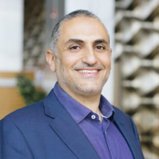
Dr. Shehab Ahmed
Professor, Electrical and Computer Engineering Chair, Electrical and Computer Engineering Program
The City of the Future project: focusing on efficient energy use, renewables and the use of AI in combination with IoT
Technology Background
The City of the Future project is focused on leveraging the latest advancements in technology to create a sustainable and efficient city. The project combines the use of renewable energy sources, such as solar and wind power, with cutting-edge technologies like the Internet of Things (IoT) and artificial intelligence (AI). By doing so, the project aims to reduce energy consumption, improve energy efficiency and lower carbon emissions.
Opportunity
The City of the Future project represents a significant opportunity to address some of the most pressing challenges facing modern cities. With the world population expected to reach 9.7 billion by 2050, cities will need to become more sustainable and efficient if they are to support the needs of their inhabitants. The project also presents an opportunity for businesses and organizations to develop innovative solutions that can be deployed at scale.
Solution
The City of the Future project proposes a comprehensive solution that combines renewable energy sources, IoT, and AI to create a smart and sustainable city. The project involves the installation of IoT sensors throughout the city to collect data on energy consumption, air quality and other environmental factors.
Impact
The City of the Future project has the potential to have a significant impact on the environment and the economy. By reducing energy consumption and carbon emissions, the project can help mitigate the effects of climate change. The use of renewable energy sources can also reduce dependence on fossil fuels, improving energy security and lowering costs. Furthermore, the project can create new business opportunities and drive economic growth by promoting innovation and entrepreneurship.
Startups

Himanshu Mishra
Co-founder and CSO, Terraxy
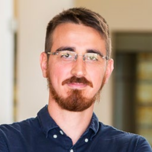
Adair Gallo
Co-founder and CEO, Terraxy
TERRAXY
RDIA Sector Sustainable Environment and Supply of Essential Needs
RDIA Sector
Sustainable Environment and Supply of Essential Needs
Market Barrier
How to address a burgeoning societal pain- point (i.e., landfilling of millions of tons of organic waste per year) to unleash a national ambition (i.e., giga-scale desert rehabilitation for food production and greening)?
Solution
Terraxy’s CarboSoil™ technology is produced from the pyrolysis of organic waste, such as chicken manure, food waste and sewage sludge. When added to sandy soil, CarboSoil™ acts as a sponge for nutrients and prevents their leaching and volatilization. CarboSoil is stable in the soil for hundreds of years. Terraxy’s SandX™ technology (USPTO #11,497,177 B2) reduces the evaporative loss of water from the soil by up to 80% under Saudi conditions.
Current Investors
KAUST Innovation Ventures US $1 M.
International presence:
Company present in KSA and has appeared and won several international platforms/competitions (World Economic Forum’s Uplink Platform, ITAS Arab Youth Competition, Prototypes for Humanity, InFlavour’s Expo)
Partners


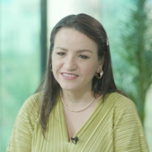
Dr. Luisa Javier
Co-founder and CEO, Wayakit

Sandra Medina
Co-founder and CMO, Wayakit
WAYAKIT
RDIA Sector -Environment and sustainability
Founded by two KAUST international students who live in Saudi Arabia
RDIA Sector
Environment and sustainability
Market Barrier
97% of cleaning and disinfection products still contain compounds that negatively impact our health, planet and productivity.
Solution
Wayakit is specialized in the development of hygiene products for cleaning and disinfection through applied biotechnology. Wayakit’s cleaners are sustainable, organic, biodegradable, nontoxic, organic, multipurpose and environmentally friendly.
Current Investors
Cumulative investment, US $2 M.
Key Customers
Presence in KSA and Mexico.
Investors




Michael Salvador
Co-founder and CEO, Mirai Solar

Michele De Bastiani
R&D, Director, Mirai Solar
MIRAI SOLAR
RDIA Sector - Energy and Industrial Leadership
RDIA Sector
Energy and Industrial Leadership
Market Barrier
Modern greenhouses are very energy- intensive
Solution
The Mirai Screen acts as both shade and a source of electricity generation. It's made of photovoltaic panels that convert sunlight into electricity.
The Mirai Screen allows for control over shade and electricity output. This makes it adaptable to different needs.
Primarily designed for greenhouses, the Mirai Screen helps regulate temperature and lighting for plants while generating electricity to power the facilities.
Current Investors
Cumulative investment USD $2.85M.


Shahzad Ghauri
Cofounder & CTO, Talon Dust Control

Dr Mohamed Omar
Cofounder & CBO, Talon Dust Control
Talon Dust Contro
RDIA Sector - Sustainable Environment & Essential Needs
-Technology background
High-sensitivity disease detection currently relies on tools such as qPCR and enzyme-linked immunosorbent assays (ELISA) which require multiple processing steps, sophisticated instrumentation and trained operators in specialized diagnostic labs. Time to result is measured in hours or, in locations remote from the appropriate diagnostic labs, in days. At the other end of the diagnostic spectrum, lateral flow rapid antigen tests give results within 10 to 15 minutes and can be performed on the spot by untrained operators. However, their limited sensitivity remains a severe drawback and means, for example, that viruses often go undetected in the early phase of an infection when accurate diagnosis is most crucial.
-Opportunity
There is a general lack of rapid (<15 min), yet high-sensitivity (close to single-molecule) diagnostic tests that can be performed in a point of care or bedside setting for the reliable detection of virus proteins or low abundance biomarkers. Even in centralized diagnostic labs, a rapid, high sensitivity and cost-efficient protein sensing technology could outcompete established ELISA assays on sensitivity, cost and time to result.
-Solution
Our nanobody transistor combines a highly modular protein-based bio-recognition layer with state-of-the-art organic electrochemical transistor (OECT) technology for signal transduction and amplification. It can detect target proteins directly from unprocessed samples at very low concentrations within a 15 minute timeframe. The direct electrical readout facilitates integration into bench-top or handheld electronic devices operating at very low voltage and with negligible power consumption from the sensor.
-Impact
Rapid, high-sensitivity protein sensing will find applications in hospital settings, where it could replace centralized ELISA assays with rapid bed-side tests. It moreover has the potential to transform disease detection in the field or in point of care settings where molecular sensitivity is currently lacking.
Health and Wellness

Dr. Sahika Inal
Associate Professor, Bioengineering
Dr. Raik Grünberg
Research Scientist, Structural Biology and Engineering

Dr. Shofarul Wustoni
Postdoctoral Fellow, Computational Bioscience Research Center
A BIOELECTRONIC AMPLIFIER FOR PATHOGEN DETECTION.
-RDIA Sector:
Sustainable Environment & Essential Needs
-Market Barrier:
Awareness; Low cost of potable water; use of groundwater for dust control
-Solution:
Circular-economy, KSA-made liquid spray-on products that control dust with up to 90% reduction in water needs; micro-dosed (1:5000) water extenders that reduce evaporation by 30% for use in landscape irrigation, gel-based blasthole stemming technology that improves rock fracturing and reduces dust in mining and civil applications.
-Current investors:
KAUST ($1.17M USD)
-International presence:
KSA market, have engaged with UAE and Oman based companies, massive market in GCC.